Firewood Delivery
Prevention is and will continue to be very important for all of the Evergreens in Colorado.

Firewood Delivery

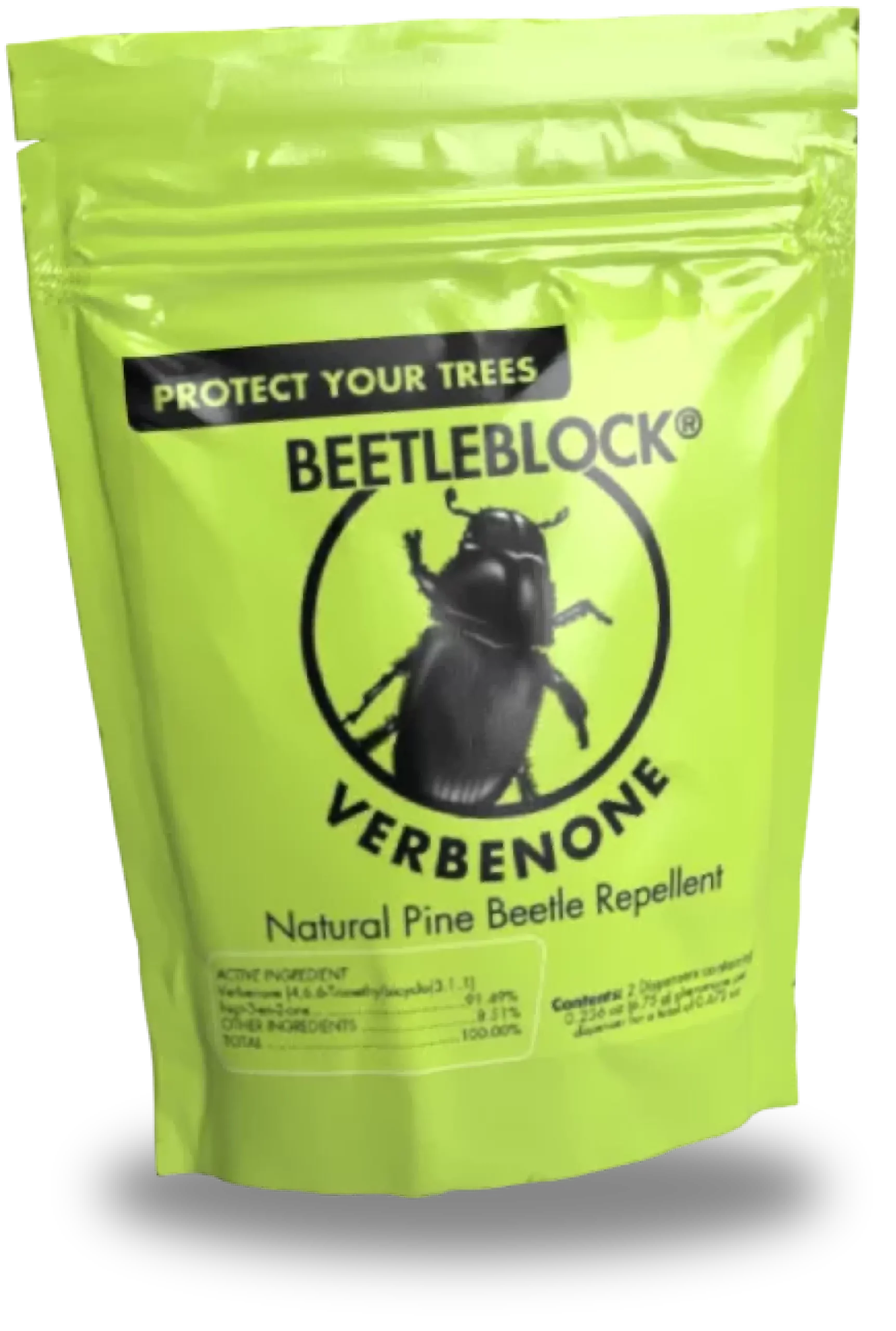
Beetle Block
You can order the new FDA-approved, eco-friendly, self-installed Beetle Block packets. 

Request Free Proposal
Need a bid for tree spraying or other tree work? Fill out our online form and we will contact you shortly. 


ALPINE TREE SERVICES IS LICENSED AND INSURED.

INSECTS & Diseases

Below we highlight four common insects and diseases:


Ips Beetles

by W. Cranshaw and D.A. Leatherman1

Quick Facts...

  • Ips is a common group of bark beetles that infests pine and spruce trees.
  • Ips beetles rarely attack healthy trees. Most problems with ips occur to newly transplanted pines or when plants are under stress.
  • Several generations of ips can occur in a season.
  • There are 11 species of ips beetles found in Colorado.

Ips beetles, sometimes known as “engraver beetles,” are bark beetles that damage pine and spruce trees. They develop under the bark and produce girdling tunnels that can cause dieback and kill trees. Eleven species of ips beetles occur in Colorado (see Table 1 below).

Table 1. Common ips beetles (Ips species) affecting pines and spruce in Colorado.
Species Hosts Comments
Ips hunteri Spruce This is a common species affecting Colorado blue spruce in landscape settings. Upper portions of the tree are typically infested first.
Ips pilifrons Spruce A forest species often called the “spruce ips”; tends to infest the upper part of fallen trunks.
Ips pini Ponderosa, lodgepole The most common species associated with other pines pines in Colorado.
Ips knausi Ponderosa pine Common at base of trunk and in fresh stumps.
Ips calligraphus Ponderosa pine Largest ips species in Colorado; often in main trunk.
Ips confusus Piñon, rarely other pines Periodically kills piñons over large areas.
Ips latidens 3- and 5-needled pines  
Ips borealis Engelmann spruce  
Ips integer primarily Ponderosa pine  
Ips woodi Limber pine  
Ips mexicanus Lodgepole and limber
pines


Ips beetles are generally not considered as destructive or aggressive as bark beetles in the genus Dendroctonus (mountain pine beetle, spruce beetle, Douglas-fir beetle). Normally ips beetles limit their attacks to trees that are in decline due to root injuries, wounding, or other stresses. However, under widespread conditions which allow improved survival and large population build-ups, ips beetles are a considerable threat to living trees. Two factors that recently contributed to ips beetle problems in Colorado include: prolonged drought stress; and the creation of freshly-cut wood (which is a prefered breeding site) from forest homeowner efforts to reduce wildfire hazards.


Adult Dendroctonus Adult Ips
Figure 1: Adult Dendroctonus (left) versus Ips (right). Note gradually curved wing of Dendroctonus. Actual size of Dendroctonus from 1/8 to 1/3 inch, Ips 1/8 to 3/8 inch.

Ips beetles are small (1/8 to 3/8 inch long), reddish-brown to black beetles. They have a pronounced cavity at the rear end, which is lined with three to six pairs of tooth-like spines, depending on the species. The latter feature distinguishes them from other bark beetles (see Figure 1).

Symptoms of Ips Beetle Injury

Top dieback of spruce from drought stress and ips attack.
Cut firewood near suscepiible trees
Storing cut firewood near susceptible trees greatly increases the risk of ips beetle attack.

As adult ips beetles enter trees and tunnel, a yellowish- or reddish-brown boring dust is produced and accumulates in bark crevices or around the base of the tree. When the larval tunnel, affected parts of the tree discolor (“fade”) and die.

These symptoms may be limited to parts of the tree, such as a single branch or the top. However unlike mountain pine beetle, infestation by ips beetles does not necessarily mean the whole tree will die, but over time, attacks may progress as later generations “fill” the tree and then ultimately the host can die.

Small round holes in the bark of infested trees indicate the beetles have completed development in that part of the tree and the adults have exited. The presence of these holes peppering the bark show the beetles have moved to another part of the same tree or to neighboring trees.
Woodpeckers are common predators of ips beetles. Their presence may also indicate bark beetle activity. Woodpeckers often remove the tree bark in an effort to obtain this food source. This habit results in ragged holes or patches of missing bark on the tree.

Generalized Life History

Adults overwinter under the bark or in surrounding litter at the tree base. They begin to attack weakened trees in the spring. Initially the male enters the tree, constructs a cavity under the bark known as the “nuptial chamber.” Females are attracted to the tree by chemicals (pheromones) produced by the male.

After mating, females (usually three) excavate egg galleries off the central chamber. The tunnels produced by the adults appear as a “Y”- or “H”- shaped pattern. These galleries are mostly free of boring dust, which is pushed out of the entrance hole as the adult beetles work. These “cleared out” galleries have a different appearance than the debris-filled galleries of Dendroctonus. Eggs are laid along the gallery and young larvae soon hatch and begin tunneling smaller lateral galleries that lightly etch the sapwood. They are small grubs, about 1/4 inch long when mature, white to dirty gray, legless, with dark heads. In Colorado, two to four generations of these beetles usually develop per year.

Boring dust
Boring dust at the base of a pine tree. Reddish boring dust is caused by ips beetles. The whitish dust is from ambrosia bark beetles.
Tunneling by Ips hunteri
Tunneling by Ips hunteri in blue spruce.

Management

To prevent ips beetle attacks, use practices that promote vigorous tree growth. Properly siting trees in landscape plantings is important to allow optimal growing conditions as the tree matures. Adequate – but not excessive – water may be needed. Root injuries caused by mechanical damage, compaction, or disease should be avoided.

Freshly-cut material that results from pruning or thinning practices (called “slash”) should be removed from the vicinity of valuable trees. Never stack green or infested coniferous wood next to living coniferous trees. Such green woody material should be chipped or treated so that the inner bark area is destroyed. Ips larvae will not survive standard chipping or debarking treatments. Other treatments could include scattering (as opposed to piling) slash to promote rapid drying.

Trees at risk of ips attack include newly transplanted trees, trees suffering root injuries from construction, and trees surrounded by large breeding populations of ips beetles. These types of trees can benefit from preventive insecticide applications.

Insecticides are used as drenching preventive sprays on the trunks and larger branches. These insecticides need to be applied prior to adult beetle infestation. (Remember that overwintering beetles begin emerging in spring as soon as daytime temperatures consistently reach 50 F to 60 F.) However, timing can be difficult to determine since ips beetles can have multiple, overlapping generations and life cycles. Adults have been observed entering trees during warm days as early as late-February on through November. Because of this extended activity, two treatments (early spring and summer) may be needed to protect trees during high-risk conditions.

Insecticides used to prevent ips include either permethrin, bifenthrin, or carbaryl (Sevin) as the active ingredient. There are many products currently on the market containing these active ingredients. Follow the manufacturer’s recommendation for the proper rate for bark beetle treatment. Bark beetle applications at the labeled rate should provide at least three months control of ips beetles.
When a preventively-sprayed tree later dies of beetle attack, it is usually for one of the following reasons: 1) the tree was sprayed after it was attacked; 2) the spray was applied at too dilute a rate; 3) the entire bark surface of the susceptible part of the tree was not sprayed; or 4) the material wore off and was no longer effective.

Note: Concentrations of insecticides used to control bark beetles are often considerably greater than those used for insects on foliage. To avoid needle burning, try to limit the application to the bark, particularly when using liquid (emulsifiable concentrate) formulations that have increased risk of causing plant injuries.

Insecticide applications are not needed when ips beetles do not pose a serious risk to healthy trees. Ips problems are often an issue for a few years, then lessen naturally to non-threatening levels. This is the normal condition in Colorado. A rule of thumb when deciding if preventive treatments are needed is to survey for infested groups of bark beetle-killed trees (as determined by dead foliage) within sight of the live trees in question. Also, transplants or recently disturbed trees in natural forest areas or near other known sources of ips may warrant protection. Tree value, of course, is always a consideration. There is often more interest in protecting high-value trees such as those around residences, golf courses, or in other highly visible settings.

No chemical treatment exists for trees or wood already infested by ips beetles. In rare cases where it is feasible to reduce the threat to live trees by killing beetles within infested trees before they exit, treatments involve bark removal, chipping the wood into small pieces, covering piles with a double-layer of 6-mil thick clear plastic sealed around the edges with soil to heat (solarize) the wood, or physical removal of infested material from the site to an area a mile or more from susceptible trees.

 
Ips confusus pitch tubes Ips pini egg galleries
Ips confusus pitch tubes on infested pinyon pine trunk. Ips pini egg galleries under bark of ponderosa pine trunk..

Western Spruce Budworms

by D.A. Leatherman, J.W. Brewer and R.E. Stevens 1

Quick Facts...

  • Western spruce budworms are the most important tree defoliators in the West.
  • Budworm larvae eat the new growth of host trees.
  • Douglas-fir is the favored host in Colorado.
  • Budworm has a one-year life cycle.
  • Budworm control measures usually are conducted in June.
Western spruce budworm adult
Figure 1: Western spruce budworm adult.

Description and Life Cycle

The western spruce budworm, Choristoneura occidentalis Freeman, is the most widely distributed and destructive forest defoliator in western North America. Several outbreaks have occurred in Colorado, the largest exceeding two million acres. In Colorado, they most commonly infest Douglas-fir and white fir. Occasionally, they also attack Engelmann spruce, blue spruce and subalpine fir.

Western spruce budworm adults (Figure 1) normally are small, mottled, rusty-brown moths, but color can vary from tan to almost black. In Colorado, they are present from late June to early August. After mating, females lay masses of overlapping green eggs on the undersides of needles (Figure 2). The masses consist of 25 to 40 eggs that hatch in about 10 days. The young larvae do not feed but move to crevices under bark scales or lichens where they spin silken shelters called hibernaculae. There they remain dormant throughout the winter.

In late April or May, the larvae migrate to the foliage, where they mine old needles or feed on host tree flowers. In a week or two, they enter developing buds, the habit that gives them their name. As the new needles lengthen, the rapidly growing larvae continue to feed. It is during this stage that most of the damage occurs. They web the new foliage together loosely and feed inside, where they are somewhat protected from predators and other enemies.

budworm egg mass
Figure 2: Western spruce budworm egg mass on needle.
larva
Figure 3: Western spruce budworm larva.

In the late larval stages (Figure 3), budworms have brownish heads and brownish-olive bodies. Each body segment has two conspicuous pairs of white spots. About 40 days after feeding begins in the spring, usually about the end of June, the larvae pupate inside feeding webs or on foliage. Adults emerge a week or so later and the cycle is complete. There is one generation per year.

Damage and Associated Impact

Budworms are important because they can eat all the new growth produced by host trees. The new needles are most important in producing food for the tree, so the immediate effect of defoliation is a reduction in growth.

To the homeowner, defoliation mostly means a loss of aesthetic value. As defoliation progresses, both in extent and duration, more significant impacts are likely. The foliage, especially the branch tips, turns brown and dies. Twigs, branches or entire tops of trees may be killed. During long-running outbreaks, three to five years or more, about one tree in four will die. Nonfatal defoliation may also lead to infestation by the Douglas-fir beetle or other bark beetles. In turn, these can kill the tree.

Prevention

Budworms like forest stands that are dense, dominated by host species of all sizes, surrounded by similar forests, and stressed. Silviculture practices that thin forests, convert them to nonhost species, or limit host species to one size help prevent serious damage. This is the long-term solution to budworm.

Control

Budworm populations usually are held in check by a combination of predators, parasites, adverse climatic conditions, or inadequate food supply. Spiders, insects and a variety of birds are important predators. Adverse weather conditions, particularly sudden freezes in late spring, may kill large numbers of larvae. A major factor in ending long-term outbreaks appears to be starvation from inadequate or nutritionally poor food sources. However, this may not be a factor in urban situations. Cultural practices such as thinning, watering and fertilizing, which promote tree vigor, may help trees better withstand repeated attacks.

Chemical control often is used to protect high-value trees from defoliation and associated damage. The materials listed below are registered for western spruce budworm control and have been used with success in Colorado. They can be applied both from the ground and aerially. In either case, time spraying to occur during the two to three weeks immediately following budbreak or flush of new growth. In most years, this occurs about mid-June.

Table 1: insecticides for control of Western Spruce Budworm.
insecticide Trade name
Bt (Bacillus thuringiensis) Dipel, Thuricide
carbaryl Sevin

Cytospora Canker

by W.R. Jacobi 1

 Quick Facts...

Orange discoloration
Figure 1: Orange discoloration found in spring and early summer associated with cytospora canker.
Canker on branches
Figure 2: Cytospora canker on three branches, each with scattered pycnidia.
Orange spores oozing
Figure 3: Orange spores oozing from pycnidia.
  • Cytospora canker occurs on woody plants or parts of plants that are weak or stressed.
  • Many trees are affected by this disease, including aspen, birch, cottonwood, poplar, spruce, willow, ash, maple, elm, peach and apple.
  • To manage the disease, reduce stress on trees, use resistant plants, remove infected limbs, clean wounds and prune properly.

Cytospora canker is caused by various species of the fungus Cytospora. These pathogens affect many species of trees in Colorado, including aspen, cottonwood, lombardy and other poplars, apple, cherry, peach, plum, birch, willow, honeylocust, mountain ash, silver maple, spruce and Siberian elm. Based on recent studies at Colorado State University, some Cytospora species are host specific and will not spread to other tree species. Aspen and cottonwoods are attacked by the same fungus. Willow, green ash, alder and elm, however, are attacked by fungi that seem host specific.

The fungus attacks trees or parts of trees that are injured or in a weak or stressed condition. It can cause their death. Trees affected by drought, Insects, defoliation by fungi, sunscald, herbicides, or mechanical injury are susceptible to cytospora infection.

The disease especially affects trees with root damage, which are often found in areas under construction, or trees that have been recently transplanted. Stands of aspen that have been thinned and young aspen sprout stands may suffer from cytospora canker.

Symptoms

The symptoms of this disease are yellow or orange-brown to black discolored areas on the bark of the trunk and branches (Figure 1). Liquid ooze on aspen and gummy ooze on peach and cherry are common. Cankers, sunken dead areas of bark with black pinhead-sized speckling or pimples, may be evident (Figure 2). The pimples are the reproductive structures of the fungus. Under moist conditions, masses of spores (seeds) may ooze out of the pimples in long, orange, coiled, thread-like spore tendrils (Figure 3). Reddish brown discoloration of the wood and inner bark also may be evident. Dead bark may remain attached to the tree for several years, then fall off in large pieces.

On spruce trees, the disease appears as sunken areas surrounded by swollen callus giving a gall-like appearance. Small black fruiting bodies may occur on the canker. Once the branch is girdled, needles may yellow or redden. The branch eventually dies. Large amounts of resin flow from infected areas, coating branches and stems. Unless you see sunken areas surrounded by swollen callus, resin flow on spruce may indicate that other stresses, diseases or Insects are affecting the tree.

Control

Because this canker usually occurs on a weakened host, the first and foremost method of control is to prevent infection by preventing stress on the tree. Drought and flooding soil with water are the two most common stresses that predispose trees to cytospora infection.

To help a tree resist infection, prepare soil before planting, fertilize, water properly for winter and summer, prune, and avoid injury to the trunk and limbs. Proper care of recently transplanted trees also is essential to avoid stress and infection.

Wounds caused by lawnmowers and weed trimmers are prime targets for infection on trees in landscaped areas. Insects, such as oystershell scale, stress the tree and predispose it to cytospora infection. They should be controlled.

Help prevent cankers at pruning wounds on peach and cherry trees by applying labeled fungicides as wound dressings. The effectiveness of fungicides on other trees is not known. Research on other diseases indicates effectiveness is probably limited.

Another way to prevent cytospora damage is to use resistant species or varieties in new plantings (Table 1). Remember, resistant does not mean the plant is immune, just better able to defend itself against the pathogen than some other tree. It is still important to keep all trees healthy. Purchasing healthy nursery stock will decrease the possibility of infection.

Once infection occurs, the best treatment is to increase plant vigor and sanitation. Remove all infected limbs and other areas. When removing branches, make a smooth cut at the base of the limb, as near the trunk as possible, without damaging the branch collar (swollen area at base of branch). Jagged and rough cut surfaces promote infection.

Clean wounds to avoid further spread of infection. Remove dead bark to dry out the diseased area and help the tree defend itself against insect and fungal attacks on the cankered area. Directions for proper wound and canker treatment are as follows:

  • Prune or cut trees only during dry weather.
  • Clean tools and wipe them with ethyl alcohol, Lysol or other disinfectant. Clorox may be used at a concentration of one part Clorox to nine parts water.
  • If a wound is fresh (one month old or less), use a sharp knife to carefully cut and remove all injured or diseased bark back to live, healthy tissue. If the wound is older, just remove loose bark pieces. It is important not to cut, remove or damage callus that may be forming at the canker edge. Callus will look like swollen bark growing across the dead area. Scrape the wound surface clean of loose bark.
  • Clean tools and disinfect after each cut.
  • Cleaned wounds should not have any sharp angles.
  • Do not apply any tar, oil-based paint or other wound dressing. The best method to prevent infection or decay is to allow the cleaned tissue to dry out.
Table 1: Some resistant species and cultivars.
Ash All cultivars.
Aspen Resistant cultivars not commercially available.
Cottonwood Cultivars Noreaster, Platte, Mighty Mo, Ohio Red. Avoid Lombardy, Bolleana, Sioux Land.
Elms
Hackberry
Honeylocust All cultivars.
Junipers
Lindens Big and little leaf.
Maples Most species and cultivars.
Pines

Twig Beetle Biology and Control
Bob Hammon and Melissa Foley, Tri River Area Cooperative Extension, Grand Junction CO

Twig beetles (Pityophthorus spp. and Pityogenes spp.) are poorly known native insects that attack conifers. They havedamaged many trees in the past few years.They target many forest grown and ornamental conifers, including pines, true firs, Douglas-fir, and spruce. Pine trees are infested more often then other species, and pinyon and Mugo are especially vulnerable.  As the name implies, twig beetles attack small branches and twigs, Twig beetle damage often appears as a flagging, or curling of branch tips. Tips will turn brown and die. Often, only a portion of a tree will be attacked by twig beetles. Young trees and trees that are stressed are vulnerable. Shaded and storm-damaged twigs are especially susceptible. Twig beetle populations can be elevated in areas where activities like logging, pruning, or root damage from construction are occurring.  Trees affected by twig beetles are often stressed by conditions like drought, disease, or physical damage. Under extreme situations, healthy trees can be attacked. Twig beetle outbreaks in a forest setting can be an indication that conditions are
favorable for damage from bark beetles.  Tree mortality from twig beetles alone is rare, but has been documented in pinyon pines. Damage to landscape trees can be severe enough to justify tree removal.

LIFE HISTORY
Several species of twig beetles are present in western forests. Adults are small, 1.5-3.5 mm long, depending on the species. Pityophthorus tend to be smaller than Pityogenes. Their color ranges from light. Small circular exit holes on the twigs indicates twig beetle damage.  Twig beetle infestations can be diagnosed from the pitch tubes hanging from infested twigs.  The adults overwinter, then emerge during the early spring and begin searching for a host. This can occur as early as mid-March in some areas following a mild winter. Adult emergence tends to be synchronized, with many beetles emerging at once.

Once the adult twig beetle has located a host it will bore under the bark of the twig. This is indicated by the presence of orange-colored boring dust around the entrance hole or at the base of the tree in the case of a large infestation. Very little pitch is produced. After boring under the bark, egg galleries are formed by the female. These galleries resemble a star-shaped pattern radiating from a central chamber. Twig beetle grubs are “C”-shaped and legless with caramel-colored heads and fat white bodies.  Two to four generations are produced by
most twig beetle species each year.

MANAGEMENT
Twig beetle damage is often associated with drought, root or other damage or other tree stresses. Protecting newly transplanted trees, and avoiding stress to established conifers by providing good cultural practices to landscape trees is essential to preventing damage. The only chemical control option is to spray high risk trees prior to attack. There is no treatment for trees once they are infested. Insecticides such as permethrin (Astro), or carbaryl (Sevin) can be used to spray the larger branches and twigs. Many formulations and trade products are registered for use. Be sure to read and follow all label directions. In general, permethrin or carbaryl will provide 90 days residual control when applied at the highest labeled rate. Formulations with high percentage of active ingredient (> 20%) are far superior to, and cheaper than lower percentage (<5%) active ingredient products.  Two or three applications may be required to protect trees continuously between April and October. These insecticides kill the adult beetles as they chew through the bark of the tree.  Protective sprays aimed at pinyon Ips are effective against twig beetles if coverage of the twigs is complete. Twig beetles are often found in association with these bark beetles. Preventative sprays should be limited to high value ornamental or landscape trees in high risk areas. These are areas with established populations of the beetles, and widespread stress on trees from drought or other factors. Control of twig beetles in forest situations is nearly
impossible.

For a complete list and details of insects please visit the Colorado State University Extension at:

http://www.ext.colostate.edu/pubs/pubs.html#insects
Alpine Tree Services, LLC © 2007 - 2012
Alpine Tree Services is located in Summit County, Colorado
 
HomeBeetle BlockAbout UsContactServicesEmployment OpportunitySite mapPhoto GalleryPrivacy Policy